 Bon Manzé
 Prawns in Mauritius: how to choose the best
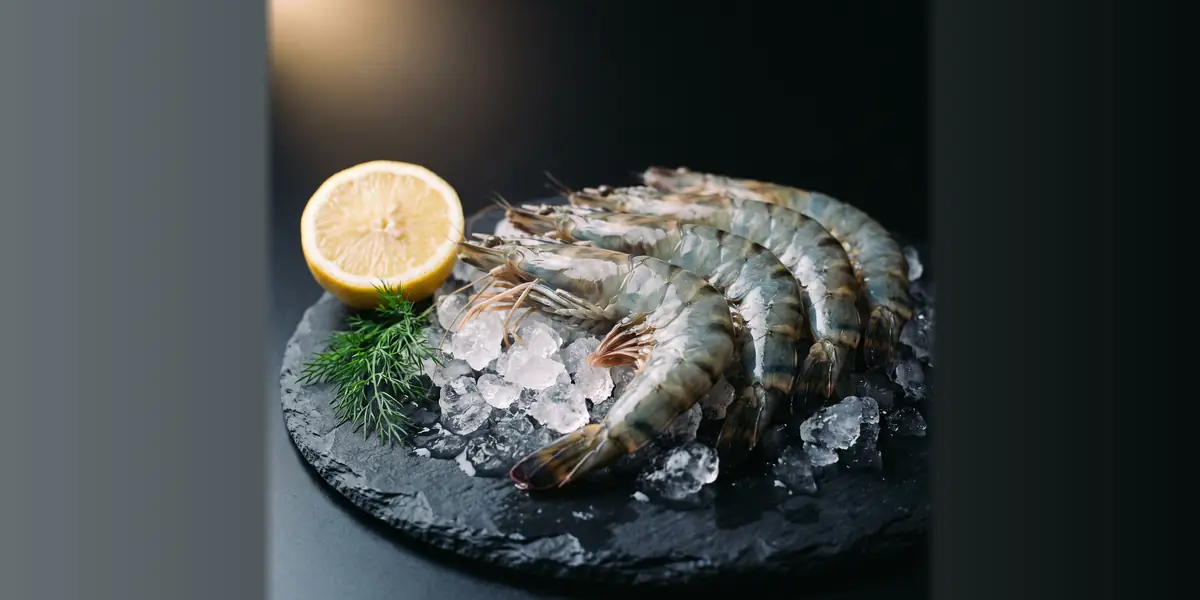
Prawns and shrimp vary by species, size, presentation and condition. Use the stated piece count per kilo, origin, preparation and batch information to compare two references on the same basis.
This guide explains grade, visible quality checks, the catalogue information for OSO prawns and the points to confirm before cooking or ordering in Mauritius.
Prawn or shrimp: the difference that matters
The two are often confused, but it all comes down to grade. "Prawn" and "shrimp" describe closely related shellfish; the difference is mostly one of size and flesh. A prawn is large and meaty, with firm flesh that holds up to cooking; pink shrimp is finer and more delicate, perfect in a quick pan-fry or a salad.
The real professional marker isn't the name — it's the grade, expressed as the number of pieces per kg. The lower the number, the bigger the pieces. A prawn at 7-8 pieces per kg is called "colossal": each piece then weighs around 130 to 140 g. A small shrimp, by contrast, can run 60 to 80 pieces per kg.
Spotting a quality piece
A fine prawn or shrimp shows a few simple signs, in Mauritius as anywhere:
- The grade in pieces per kg — ours is stated clearly (7-8 pieces per kg for the OSO prawns).
- Firm, translucent flesh, never soft or cottony.
- A glossy shell, well attached to the flesh, with no blackened head.
- A mild, sea-fresh smell — never a whiff of ammonia, the sign of a piece that has turned.
- Traceability: origin, farm, farming method. A prawn whose provenance is known always beats an anonymous bag.
These same markers apply to everything from the sea: find them in our guide to fresh fish in Mauritius.
Why OSO Farm in Madagascar
The catalogue lists OSO prawns from Madagascar, presented as organic by the supplier. For any certification claim, ask which document and batch it covers.
- Presented as organic by the farm, via our supplier partner.
- A colossal grade: 7-8 pieces per kg, rare to find on the island.
- Preparation to confirm for the available batch: check whether the shell, head and vein have been removed before choosing the cooking method.
Products are delivered fresh. Availability and the delivery window are confirmed on WhatsApp according to arrivals and orders; no fixed cutoff or next-day delivery is guaranteed. Delivered fresh describes the condition at delivery, not a guarantee that the product has never been frozen. Confirm the batch history and follow its storage instructions before deciding whether to freeze it.
Price & arrival
Our indicative prices (VAT included, subject to arrival, confirmed at weighing):
- OSO prawns — Madagascar · organic per supplier · Approx. 7 to 8 pieces per kg · Rs 2,600/kg. Availability and preparation to confirm.
- Sicilian pink shrimp — Sicily · Mediterranean. Check availability and price on request.
- Sicilian pink shrimp: on request.
- Carley crab : Rs 2,000–2,200/kg · Fresh octopus : Rs 1,200/kg.
Minimum order: Rs 1,500, with free delivery anywhere in Mauritius.
The perfect cooking
A colossal prawn asks for almost nothing — above all, don't overcook it:
- In a pan or on a plancha, very high heat, 2 to 3 minutes per side, no more. The flesh should stay pearly, never rubbery.
- The crowd-pleaser: garlic, butter, parsley — a few seconds more just to coat.
- On the barbecue, whole in the shell: they keep all their juice and take on a light smoky note.
- Never overcook: as soon as the flesh turns from translucent to pearly white, it's done. Overcooked, a prawn goes dry and loses all its appeal.
Fancy some beautiful prawns?
Browse the menu and prices, or simply ask us whether an arrival of OSO prawns is planned — we reply on WhatsApp.
Frequently asked questions
What's the difference between a prawn and a shrimp?
Both describe closely related shellfish; the difference is mostly one of size and flesh. A prawn is large and meaty, with firm flesh that holds up to cooking; pink shrimp is finer and more delicate. The real marker is not the name but the grade, in pieces per kg: the lower the number, the bigger the pieces.
What does a grade of 7 to 8 pieces per kg mean?
It means 7 to 8 pieces make up a kilo, so around 130 to 140 g per prawn. That is a so-called colossal grade, rare and highly sought after. The grade is the only figure that objectively describes the size of the pieces.
Are the OSO prawns really organic?
They are presented as organic by the supplier. Bon Manzé does not hold the certification; ask which supporting document and batch the statement covers.
Do prawns need peeling before cooking?
Check the preparation of the available batch: shell, head and vein may affect the steps and cooking method. Have the exact presentation confirmed before ordering.
How does delivery in Mauritius work?
Everything is vacuum-packed, cold-chain kept and delivered across Mauritius. Pay on delivery, in cash or by Juice MCB; nothing is paid online. Free delivery from Rs 1,500. Prices are indicative, VAT included, subject to arrival, confirmed at weighing.