 Bon Manzé
 Wild Salmon in Mauritius: Why It Beats Farmed
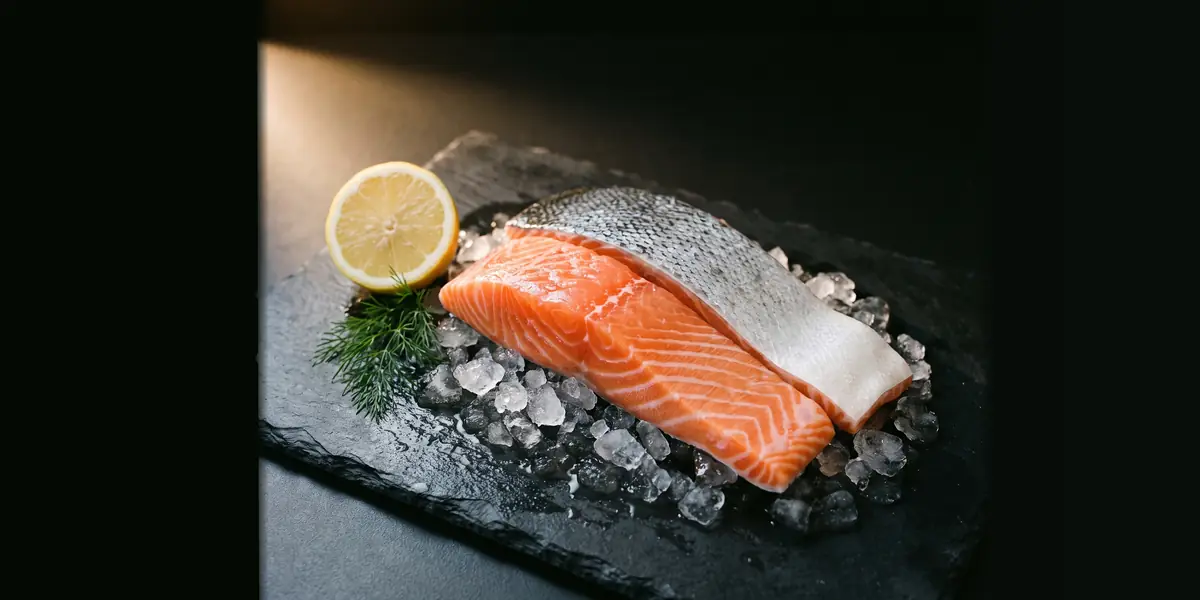
Salmon has become the family favourite on Mauritian tables: easy to cook, popular with children, packed with good nutrients. But not all salmon is the same. Behind the one word sit two very different realities — farmed salmon and wild salmon.
This guide sets out what really sets wild Alaskan salmon apart: why its flesh is firmer, what its omega-3 is worth, and how to have a whole fillet delivered to you — fresh and vacuum-sealed — anywhere in Mauritius.
Wild or farmed: the real difference
A wild salmon spends its life in the open sea, in the cold waters of the North Pacific off Alaska. It swims a great deal and eats what the ocean offers it: smaller fish, crustaceans, krill. That active life and natural diet shape what you find on the plate.
- Firmer flesh. All that swimming works the fish's muscle: the texture is dense, it holds together as it cooks and doesn't weep water.
- Leaner, better-balanced fat. Wild salmon is naturally leaner than a fish raised to fatten quickly in a pen — and the fat it does carry is largely omega-3.
- Natural colour. Its orange hue comes from what it eats at sea, not from an added dye. A true colour, deeper or softer depending on the batch.
- No farm antibiotics. A fish living free in the sea isn't managed like stock kept in a crowded pen.
Farmed salmon is nothing to be ashamed of — it's what made this fish available to so many people. It's simply raised in pens and fed pellets to grow fast, which gives a fattier, softer flesh, its colour drawn from that diet. Wild salmon takes the other path: the open sea, with the texture and taste that come with it.
Omega-3, the family fish
If salmon has such a good name, it's first of all for its omega-3 — the fatty acids the body can't make itself and has to get from food. Wild salmon is one of the best sources there is. They're widely linked to benefits for the heart, brain and eyesight: a fish recommended for children and adults alike.
Add quality protein, vitamin D and vitamin B12, and it's easy to see why so many families put it on the menu once or twice a week — a single fillet feeds the whole table. To mix things up, salmon sits naturally within a wider selection of fresh fish in Mauritius.
The smart format: 10 vacuum-packed portions
A whole wild salmon fillet is a fine thing — but what do you do with it when there are just two of you, or you only want one piece tonight? That's where our format changes everything. Each whole fillet (2.4 to 2.6 kg) is prepared as 10 individual portions, vacuum-packed one by one.
- Individual portions help you plan meals. The salmon is delivered fresh; confirm the batch history and follow its storage instructions before freezing any portions.
- No waste. No more half a fillet forgotten at the back of the fridge: every piece is already sized for one person.
- If you have a frozen portion, follow the batch’s defrosting instructions. Fresh delivery does not establish the previous freezing history.
The pleasure of a large fish, with the flexibility of a single portion.
Three ways to cook it well
Because wild salmon is leaner, it asks for a little care: the goal is to keep it moist, never dried out.
- In the oven, en papillote. Wrap the portion with a drizzle of olive oil, lemon, herbs and a little salt. 12 to 15 minutes at 180 °C: the steam cooks the fish gently and concentrates the flavour.
- On a griddle, skin-side down. Lay the fillet skin-side down on a hot griddle or pan and let the skin turn crisp. The fat protects the flesh, which stays pearly at the centre.
- Seared, just through. Sear the fillet a few minutes each side, leaving the centre just pink and warm and the flesh still tender. Salmon should always be cooked through: this guide does not recommend eating it raw.
In every case, salt towards the end of cooking and avoid overcooking: as soon as the flesh flakes into large pieces, it's done.
Our wild salmon in Mauritius
At Bon Manzé Maurice, we chose salmon the way you'd always want to find it:
- Wild-caught Alaskan salmon, from wild fishing — never farmed.
- A whole fillet of 2.4 to 2.6 kg, prepared as 10 individually vacuum-packed portions.
- Fresh and pure, with firm flesh and a natural colour, rich in omega-3.
- Delivered vacuum-sealed, cold chain maintained, anywhere in Mauritius.
- Guide price: Rs 2,500/kg, VAT included. A whole fillet comes to roughly Rs 6,000-6,500 depending on exact weight — the precise amount is confirmed by weight, subject to availability.
- A real person on WhatsApp to guide you on quantity and cut.
Free delivery from Rs 1,500 · pay on delivery (cash or Juice MCB) · nothing is paid online · quantities limited per batch.
Related guide: How to store meat and fish safely at home.
Fancy a real wild salmon?
Check the price per kilo and the salmon fillet size alongside our other seafood. Availability is confirmed before ordering.
In WhatsApp, tap Send to submit your request. Availability, total and delivery window are confirmed with you before you place an order.
Frequently asked questions
What's the difference between wild and farmed salmon?
Wild salmon lives in the open sea and feeds naturally: its flesh is firmer, leaner, and its colour comes from its diet, not a dye. Farmed salmon is raised in pens on feed pellets, giving a fattier, softer flesh. We offer wild-caught Alaskan salmon, never farmed.
Where does your salmon come from?
It's wild-caught salmon from the cold waters off Alaska (wild-caught, not farmed). It's delivered vacuum-sealed, cold chain maintained, anywhere in Mauritius.
How is the salmon sold?
Whole fillet of 2.4 to 2.6 kg · 10 individually vacuum-packed portions. Delivered fresh. Delivered fresh describes the condition at delivery, not a guarantee that the product has never been frozen. Confirm the batch history and follow its storage instructions before deciding whether to freeze it.
How much does wild salmon cost in Mauritius?
As a guide (VAT included, subject to availability): Rs 2,500/kg. A whole fillet comes to roughly Rs 6,000-6,500 depending on exact weight. The precise amount is confirmed by weight, before delivery.
How do you defrost and cook wild salmon?
If your portion is frozen, follow the batch’s defrosting instructions. The next day, cook it in the oven en papillote, skin-side down on a griddle, or just seared through. Salmon is always eaten cooked: we don't recommend eating it raw.