 Bon Manzé
 9 Mauritian Lagoon Fish: Local Names, Cooking & Prices
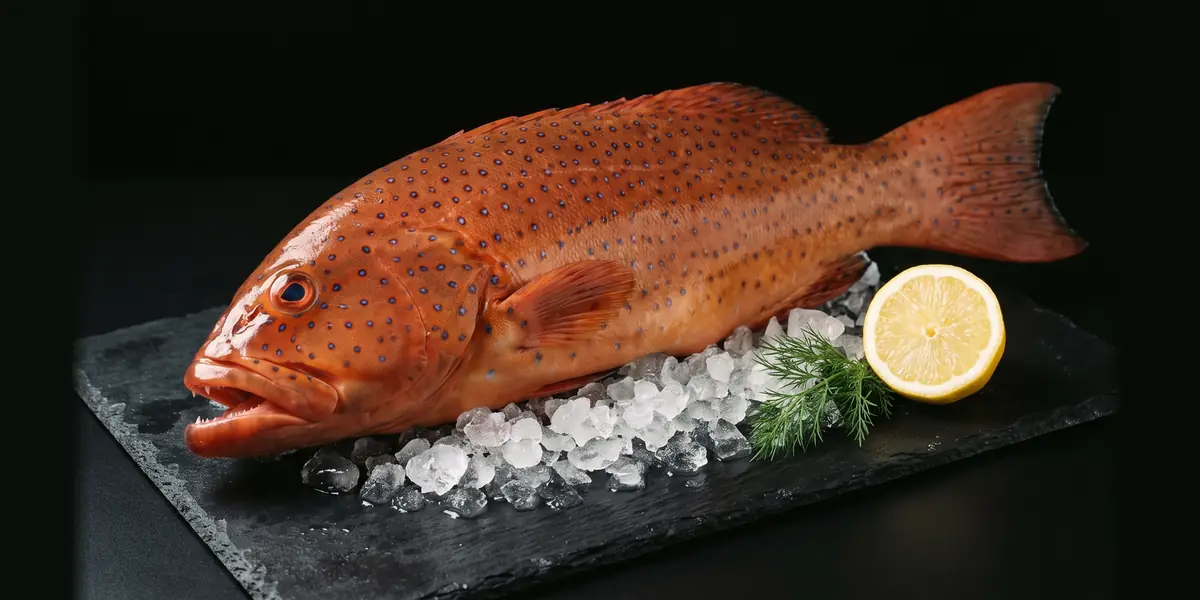
Local fish names can be confusing in Mauritius. Find babonne (vieille rouge), vacoas, cateaux and dame berry below, with the market names used in our selection, a description of the flesh and practical cooking ideas. A market name is not a scientific identification; ask your supplier to confirm the exact fish if you need that information.
Compare nine fish sold in Mauritius by the texture of the flesh, flavour, suitable cooking methods and price per kilo. The guide includes a price table and quantities per person to help you choose for a curry, frying or a barbecue. Prices and availability depend on arrivals and are confirmed before ordering.
Lagoon or open sea: two families of fish
This first distinction is worth making, because it explains almost everything else.
Lagoon fish live in the shallow water between the shore and the coral reef. They are reef fish: rounded, generally modest in size (often between 400 g and 2 kg), with white flesh and a fine flavour. Tradition cooks them whole — and that really is their best version, because the backbone and the skin hold the juices in during cooking.
Open-sea fish are deep-water swimmers: swordfish, dorado, tuna. Large, with dense flesh, they are sold as steaks or fillets and behave almost like meat on the heat. These are two different worlds, and recipes do not transfer straight from one to the other.
The nine lagoon fish, one by one
Capitaine — the great classic
If you only remember one, make it this one. Capitaine has white, firm flesh in large flakes, and a clean flavour that is never overpowering. It is the fish that keeps everyone happy at the table, including children and the people who claim not to like fish much.
It excels in curry, where the pieces hold without shredding, and it is superb whole in the oven or over coals with the skin well charred. It is also the most versatile fish on this list: hard to get wrong. Rs 800–850/kg, VAT included.
Red grouper, vieille rouge babonne — the celebration fish
The vieille is a grouper, and you can taste it: thick, pearly flesh, slightly gelatinous near the bone, melting in the mouth while keeping some bite. The red one, known as babonne, is the most sought-after of the groupers, and its price reflects that.
This is the fish you bring out for a Sunday with family or a meal that matters. In a curry it produces a sauce of remarkable richness. In the oven, whole with herbs and lemon, it needs nothing else. Rs 1 350–1 400/kg, VAT included.
Grey grouper, vieille grise (laboue) — the same character, quieter
Same family, same generous melting flesh, a slightly gentler flavour and just as good a structure. For a grouper curry without reaching the price of the babonne, this is the obvious choice. It takes particularly well to Chinese-style steaming, with ginger and spring onion. Rs 1 150–1 200/kg, VAT included.
Vacoas — whole or filleted
White, firm flesh with a pronounced sea flavour: vacoas has character, and that is precisely what its followers are after. It stands up to spices without being flattened by them, so it is excellent in a well-spiced curry, in vindaye, or grilled.
Vacoas is also available as fillets, which changes everything when you are cooking for children or simply do not want to deal with bones at the table. Whole Rs 900/kg, fillet Rs 1 100/kg, VAT included.
Dame berry — the little fish that delivers
Smaller, with fine, delicate, faintly sweet flesh. Dame berry is the fish for a proper fry-up: whole, floured, dropped into good hot oil and served crisp with a squeeze of lemon and a little chilli. One fish per person, and dinner is done.
Because its flesh is more fragile, avoid drowning it in a long sauce — it gives less in a slow curry than it does in a pan. Rs 950–1 000/kg, VAT included.
Cateaux, parrotfish — the sweetness of the reef
Cateaux is the parrotfish, the one with the improbable colours. Its flesh is white, tender, almost sweet, with very little sea flavour: a fish of real gentleness, often the favourite of anyone who finds the others too pronounced.
It asks for short, attentive cooking, since delicate flesh dries out fast. Pan-fried, baked on a bed of vegetables, or in a parcel: that is where it gives its best. Rs 1 050–1 100/kg, VAT included.
Corne, unicornfish — the griller's fish
Recognisable by the protrusion on its forehead that gives it its name, corne has firm, dense, well-structured flesh that is not troubled by live coals. This is the fish for a beach barbecue: it does not stick, it does not break when you turn it, and it takes smoke beautifully.
A lemon, garlic and ginger marinade an hour beforehand, and it is a whole dish on its own. Rs 750–850/kg, VAT included.
Pink sacréchien — for the connoisseur
Its large eyes and bright pink colour make it instantly recognisable. The flesh is white, fine and tender, with a rare delicacy — a connoisseur's fish, less common on the stalls than capitaine.
Treat it with simple cooking: baked, steamed, or pan-fried in butter. It has no need to be masked by a powerful sauce. Rs 1 200–1 300/kg, VAT included.
Silver gueule pavée — the underrated safe bet
Less familiar to the general public, gueule pavée thoroughly earns its place. White, firm flesh with a clean, balanced flavour: it behaves much like capitaine and suits the same uses — curry, oven, grill.
It is often the fish people discover by accident and then ask for again. Rs 1 050–1 200/kg, VAT included.
The summary table
- Corne (unicornfish)
- Rs 750–850/kg
- Capitaine
- Rs 800–850/kg
- Vacoas, whole
- Rs 900/kg
- Dame berry
- Rs 950–1 000/kg
- Cateaux (parrotfish)
- Rs 1 050–1 100/kg
- Vacoas fillet
- Rs 1 100/kg
- Silver gueule pavée
- Rs 1 050–1 200/kg
- Grey grouper (vieille grise)
- Rs 1 150–1 200/kg
- Pink sacréchien
- Rs 1 200–1 300/kg
- Red grouper (vieille rouge)
- Rs 1 350–1 400/kg
| Fish | Flesh | Best cooking | Price / kg |
|---|---|---|---|
| Corne (unicornfish) | Firm, dense | Coals, barbecue | Rs 750–850 |
| Capitaine | Firm, large flakes | Curry, oven, coals | Rs 800–850 |
| Vacoas, whole | Firm, sea-forward | Spiced curry, vindaye | Rs 900 |
| Dame berry | Fine, delicate | Deep-fried, pan | Rs 950–1 000 |
| Cateaux (parrotfish) | Tender, sweet | Pan, baked in a parcel | Rs 1 050–1 100 |
| Vacoas fillet | Firm, boneless | Pan, curry, children | Rs 1 100 |
| Silver gueule pavée | Firm, balanced | Curry, oven, grill | Rs 1 050–1 200 |
| Grey grouper (vieille grise) | Thick, melting | Curry, steamed | Rs 1 150–1 200 |
| Pink sacréchien | Fine, tender | Oven, steamed, pan | Rs 1 200–1 300 |
| Red grouper (vieille rouge) | Thick, pearly | Celebration curry, oven | Rs 1 350–1 400 |
Prices per kilo, VAT included. Ranges vary with arrivals. Choose the number of fish and the preparation; the price per kilo, available weight and total are confirmed on WhatsApp before you approve the order.
Choosing by the dish you want to make
- A fish curry that holds together. Capitaine, gueule pavée, vacoas. For an exceptional version: red grouper. Our Mauritian fish curry recipe covers the technique.
- A crisp fry-up. Whole dame berry, or small cateaux. Fast cooking, served immediately.
- A barbecue. Corne, whole capitaine, or a 2.5 cm swordfish steak. See also our guide to barbecuing in Mauritius.
- A vindaye. Vacoas, which keeps its character under the vinegar and turmeric.
- Boneless, for children. Vacoas fillet — or any whole fish filleted to order.
How much to order
This is where many people get it wrong, and the rule is simple: the amount you need depends on both the preparation and the appetite. Allow:
- Whole fish: 350 g per person for a light meal, 425 g for a standard meal, 500 g for a generous portion;
- Fillet: 170 to 200 g per person for a light to standard meal, 250 g for a generous portion.
For six adults, that means 2.1 kg of whole fish for a light meal, 2.55 kg for a standard meal or 3 kg for generous portions. See the other contexts in our meat-per-person guide.
Our catch in Mauritius
At Bon Manzé Maurice, lagoon fish arrives with the week's catch, and you receive it prepared exactly as you want it:
- Prepared to order — scaled and gutted, cut into steaks, filleted or butterflied. Just say so when you order: our guide to fish cuts gives you the exact vocabulary.
- Cold chain respected all the way to your door, anywhere on the island.
- Prices per kilo weighed, VAT included, confirmed at weighing before delivery — you pay the real weight, never an estimate.
- Other catalogue references, all halal: free-range chicken from Rs 425/kg, Black Angus from Rs 2,650/kg, Label Rouge lamb from Rs 2,750/kg, Madagascar prawns Rs 2,600/kg, and Kobe beef on request.
- A real person on WhatsApp: tell us the dish you are making and how many people you are feeding, and we will point you to the right fish.
Free delivery from Rs 1,500 · payment on delivery (cash or Juice MCB) · nothing is paid online.
Fancy lagoon fish this week?
Local fish and seafood, subject to arrivals. Check prices and choose your preparation.
In WhatsApp, tap Send to submit your request. Availability, total and delivery window are confirmed with you before you place an order.
Frequently asked questions
Which lagoon fish is best for a Mauritian fish curry?
Capitaine is the classic curry fish: its firm white flesh holds together in the sauce instead of falling apart. Red grouper (vieille rouge babonne) makes a richer, silkier curry, ideal for a celebration meal. Vacoas fillet works well when you are cooking for children, since there are no bones to watch out for.
Which Mauritian fish is best on the grill?
Firm-fleshed fish handle live coals best: whole capitaine, unicornfish (corne), silver gueule pavée, or a swordfish steak around 2.5 cm thick. More delicate flesh such as parrotfish (cateaux) or dame berry is better pan-fried or deep-fried than barbecued.
How much fish should you allow per person?
For a whole fish, allow 350 g per adult for a light meal, 425 g for a standard meal or 500 g for a generous portion. As fillets, allow 170 to 200 g for a light to standard meal, or 250 g for a generous portion. See the other contexts in our meat-per-person guide.
How much does lagoon fish cost in Mauritius?
Unicornfish : Rs 750–850/kg; Emperor fish : Rs 800–850/kg; Whole vacoas fish : Rs 900/kg; Dame berry fish : Rs 950–1 000/kg; Cateaux fish : Rs 1 050–1 100/kg; Vacoas fillet : Rs 1 100/kg; Silver sweetlips : Rs 1 050–1 200/kg; Grey grouper · laboue : Rs 1 150–1 200/kg; Pink jobfish : Rs 1 200–1 300/kg; Red grouper : Rs 1 350–1 400/kg. Prices per kilo, VAT included. Ranges vary with arrivals. Choose the number of fish and the preparation; the price per kilo, available weight and total are confirmed on WhatsApp before you approve the order.
Can the fish be scaled and gutted before delivery?
Yes. Scaled and gutted, cut into steaks, filleted or butterflied: just say so on WhatsApp when you order, and the fish arrives ready to cook.
Do you deliver fish everywhere in Mauritius?
Yes, everywhere on the island, with the cold chain respected throughout. Delivery is free from Rs 1,500, and payment is made on delivery, in cash or by Juice MCB.