 Bon Manzé
 Whole, steaks, fillets or butterflied: how to order your fish
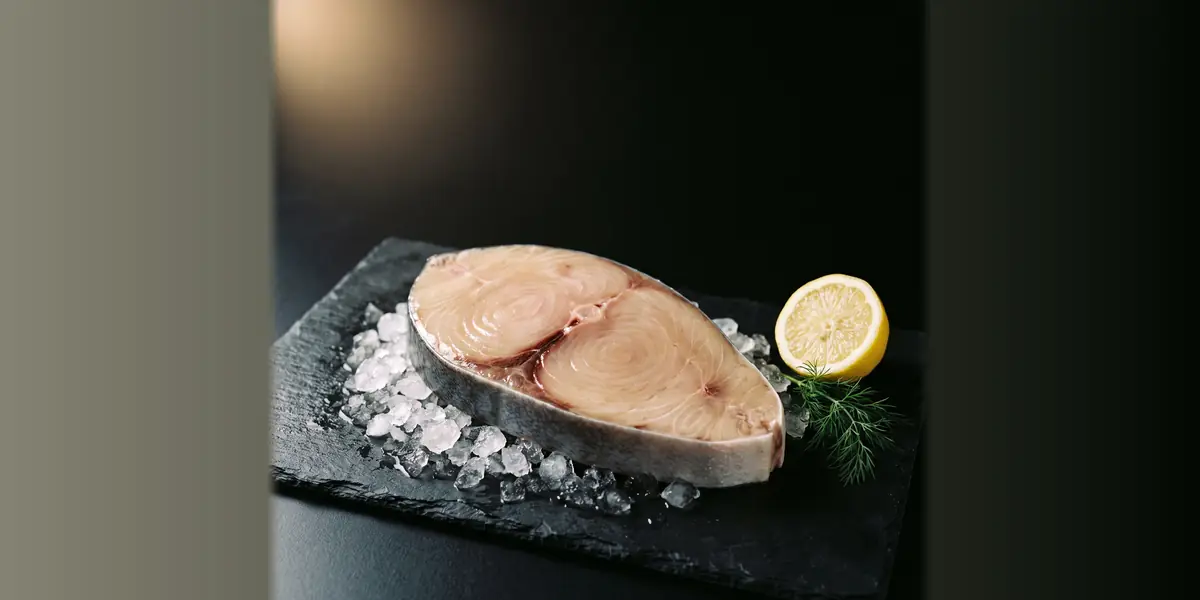
Choosing your fish is one thing. Knowing how to ask for it is another — and that's usually where it goes wrong. You end up with a whole fish when you wanted fillets for the children, or with fillets when the recipe called for thick steaks that hold together on the grill.
Yet the whole vocabulary comes down to five words. This guide explains what each one means, which preparation goes with which cooking method, how much edible flesh a whole fish really gives you, and the exact message to send so you get exactly what you need — no fishmonger's training required.
The five ways to prepare a fish
From the most raw to the most worked, here is what exists. Each step removes something: scales, guts, a head, a backbone. And each step changes both the cooking you can do and the amount of flesh that ends up on the plate.
1. Whole, scaled and gutted
The fish as it comes out of the water, with scales and guts removed — but head, skin and backbone still on. It's the default preparation, and by far the most flavourful: the bone and skin hold the juices in during cooking, so the flesh stays moist and fragrant.
Ask for it when you're baking a fish in the oven, cooking it in a salt crust, braising it whole, or making a whole-fish curry. It also makes the best impression on a table.
2. Headed
The same fish, without the head. Purely practical: it fits your dish, your fridge, your pan. You lose a little flavour (the head gives enormous depth to a stock) but you gain in convenience. Do ask us to keep the head aside if you're planning a broth or a soup.
3. Cut into steaks
The fish is cut crossways into thick slices, each keeping the backbone in the middle and the skin all around. This is the cut for large, firm-fleshed fish — swordfish, tuna, big vacoas.
Its strength: a steak holds. It doesn't collapse over coals, doesn't break when you turn it, doesn't fall apart in a sauce. Ask for it for a barbecue, a straightforward pan-fry, or a curry where the pieces must stay whole. Always specify the thickness: 2 cm for quick cooking, 3 cm for a generous steak that stays pink in the centre.
4. Filleted
The flesh is lifted from each side of the backbone, which is then removed. You get two clean pieces, with or without skin — your call, so say which. Skin on, it crisps beautifully in a pan and holds the flesh together; skin off, you get a very neat piece, ideal for children or for a dish in sauce.
Ask for it for pan-frying, en papillote, a quick oven bake, breaded fish, or any meal where your guests would rather not deal with bones.
5. Butterflied
The most elegant preparation, and the least known. The fish is opened out like a book, the backbone removed, but the skin — and often the tail — keeps it in one piece. So you get the look of a whole fish and the comfort of a fillet.
Ask for it for grilled fish that cooks quickly and evenly, a herb-and-lemon bake, or a handsome presentation without the bones. It's the preparation to choose when you're entertaining.
Which preparation for which cooking
A quick look before you write. Confirm the preparation available for the chosen fish and any charge before ordering.
| Preparation | Best for | Edible flesh |
|---|---|---|
| Whole (scaled, gutted) | Oven · salt crust · braised · whole curry | ≈ 50 % |
| Headed | Oven · standard dish · fridge | ≈ 60 % |
| Steaks | Barbecue · pan · curry in pieces | ≈ 65 % |
| Fillets (skin on or off) | Pan · papillote · breaded · children | ≈ 45 % |
| Butterflied (opened, boned) | Grilled · herb bake · entertaining | ≈ 55 % |
Indicative yields: they vary with the species, the size and the day's catch.
The weight trap: gross and net
This is the point almost everyone forgets, and it's the one that ruins dinners. A kilo of whole fish does not give a kilo on the plate. Between scales, head, guts and backbone, you're generally left with about half of it as flesh.
In practice: for a standard meal for 4 people, allow 1.7 kg of whole fish, or 425 g per person. As fillets, allow 170 to 200 g per person, or 680 to 800 g in total. What you order as fillets is what you eat, but the price per kilo is naturally higher, since the work and the loss have already been done for you.
That explains a gap you'll see on our list: vacoas is Rs 900/kg whole and Rs 1,100/kg as fillets (indicative prices, VAT included, subject to the day's catch, confirmed at weighing). Two ways of counting the same fish — the final sum lands in much the same place.
Bones: the real question when you're entertaining
Many people who "don't like fish" actually don't like bones. That's a preparation problem, not a taste problem — and one sentence at ordering time solves it.
- Children at the table? Skinless fillets, or butterflied and boned. No surprises on the plate.
- Guests you don't know well? Butterflied: the visual impact of a whole fish, the comfort of a fillet.
- Among enthusiasts? Whole, without hesitation — that's where fish is at its very best.
- Making a curry or a vindaye? Thick steaks hold far better than fillets, which break up in the sauce.
- Planning a stock? Ask us to keep the head and bones aside — that's the base of a fish stock, and it costs you nothing.
For the recipe itself, our Mauritian fish curry guide covers the pieces that hold together and when to add the fish to the sauce.
What to tell us on WhatsApp
A good fish order comes down to four pieces of information. You don't need to know the species in advance: fish depends on the tide, so we start from what actually came in that day.
- The dish you're making (oven, barbecue, curry, pan, vindaye).
- How many people, and whether there are children.
- The preparation you'd like — or nothing at all, if you'd rather we advise you.
- Your area and the time slot that suits you.
Our fish in Mauritius
At Bon Manzé Maurice, preparation is part of the service — never a hidden extra:
- Whole, headed, steaked, filleted or butterflied: request your preference and confirm what is possible for the selected fish.
- Steak thickness, and skin on or off, exactly as you ask — just say so.
- Head and bones kept aside if you're planning a stock.
- Fish according to the day's catch.
- Delivered vacuum-packed, cold chain respected, anywhere in Mauritius.
- Priced on actual weight, VAT included, confirmed at weighing before delivery.
Free delivery from Rs 1,500 · payment on delivery (cash or Juice MCB) · nothing is paid online · quantities subject to the day's catch.
Not sure which preparation?
Just tell us your dish and how many people you're feeding — we'll suggest the species of the day, the preparation that goes with it and the right weight, after confirming availability on WhatsApp.
Frequently asked questions
What's the difference between a fillet and a butterflied fish?
A fillet is the flesh lifted from one side of the backbone, so you get two separate pieces. A butterflied fish is opened out like a book with the backbone removed, but stays in one piece thanks to the skin. Fillets are easier to serve, butterflied is more striking on the table — both are free of the central bone.
How much whole fish for 4 people?
Allow 1.4 kg for a light meal, 1.7 kg for a standard meal or 2 kg for generous portions: respectively 350 g, 425 g or 500 g of whole fish per adult. As fillets, allow 680 to 800 g for a light to standard meal, or 1 kg for generous portions. See these landmarks in our meat-per-person guide.
Which preparation for a barbecue?
Thick steaks of 2 to 3 cm from a firm-fleshed fish such as swordfish or tuna: they hold over the coals and turn without breaking. Butterflied works very well too, as long as you cook it skin side first and turn it only once.
Is the preparation charged extra?
Ask for the preparation you need. Its feasibility, available format and any charge are confirmed for the selected product before you approve the order.
Can I keep the head and bones?
You can request the head and bones. Confirm whether they are available with the selected fish, how they will be packed and any charge before ordering.
Should I have the skin removed from fillets?
It depends on the cooking. Left on, the skin crisps in the pan and holds the flesh together. Taken off, you get a very neat piece, simpler for children or for a dish in sauce. Ask on WhatsApp and confirm feasibility and any charge.